Textile Thinking in Print
How craft traditions from fiber reshape what contemporary printmakers can see.
The Beginning
Anyone who works seriously with print knows the moment a surface fails. The paper too absorbent. The ink breaking across the block. The registration off by a hair — invisible until you see it, and then it's all you see. These are not accidents of process; they are conversations with constraint.
The best solutions in print come not from fighting the material, but from learning what it wants to become.
I arrived at this through textiles, not through ink. Years working with fiber taught me something about how materials speak back to you: how a weave pattern emerges from the marriage of tension and thread weight, how the fiber itself has an opinion about what it will hold. When I turned to printmaking, I realized I was looking at the same grammar — the same negotiation between intention and material reality.

The Objection
Print and textiles are different disciplines with different histories. Bringing textile thinking into printmaking is just borrowing from elsewhere without earning it.
I understand this objection, and I take it seriously. Print has its own lineage — from woodcut to lithography to contemporary digital processes — and that history should not be flattened or appropriated casually. But what I'm describing is not appropriation. It's an overlap: a set of observations that happen to live in both fields, and that become sharper when you hold them side by side.
A Worked Example: Learning from Edges
Here is how textile knowledge reshaped my approach to the edges of a print:
- Observe the break point. In weaving, the selvage — the bound edge where the weft turns back on itself — is not a defect to hide. It's where the structure becomes visible. I began asking where that moment lives in print: where does the intention of the piece meet the reality of the material edge?
- Ask what it can show. Instead of treating the edge as a problem (a place where the paper tears, or the ink smudges), I started treating it as information. What does the edge of this print want to reveal about how it was made?
- Integrate it into the design. Now the edge is part of the composition. A deckled edge isn't hidden; it's active. An overprinted edge isn't a mistake; it's intentional. The boundary becomes part of what the work is saying.
- Watch what happens next. Viewers slow down at the edges. They look for clues. The frame of a piece suddenly includes information about making, and that invitation — to see the craft — becomes the heart of the conversation.
What This Looks Like in Practice
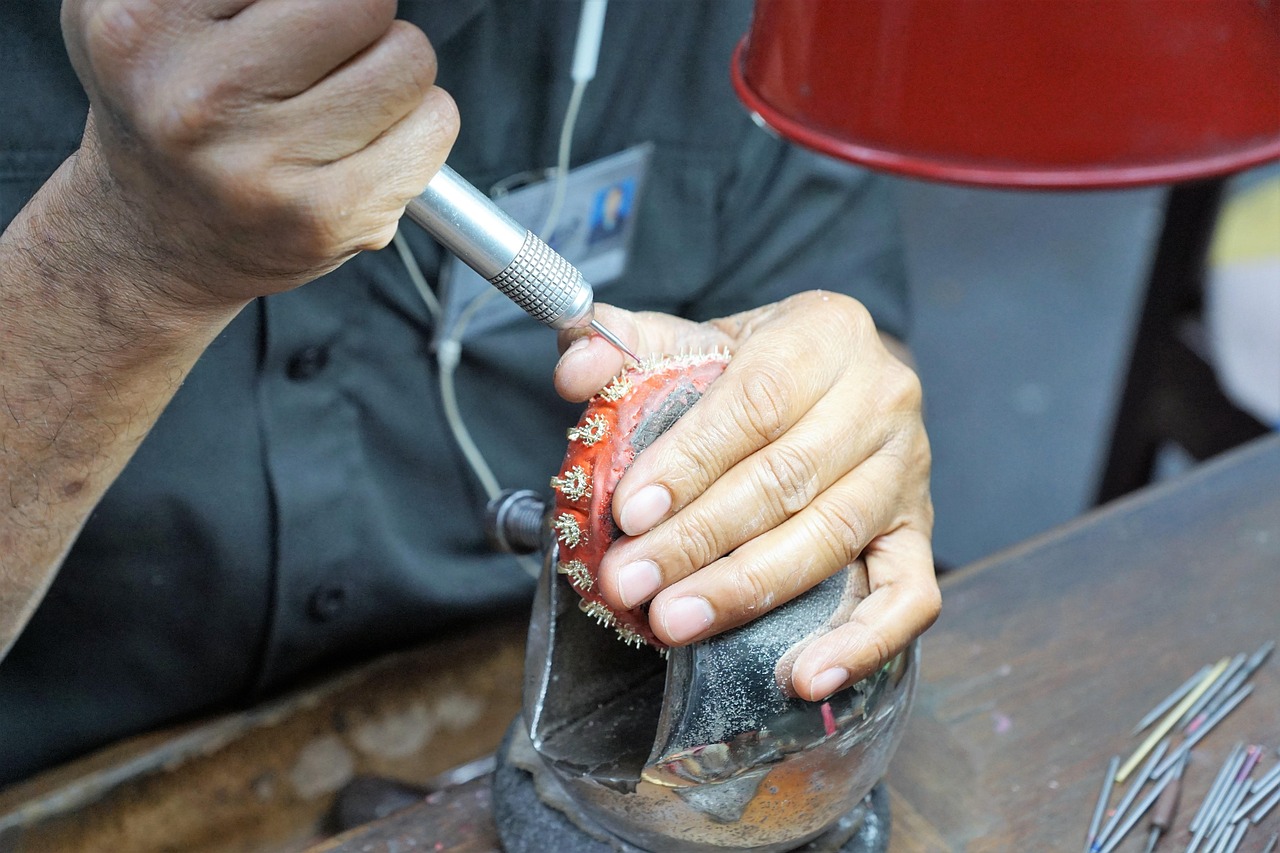
The studio has a wall where I pin pieces in progress. You'll see finished prints beside fiber studies beside photographed details of weaving. The conversation between these disciplines is constant. A problem in one opens a door in the other. A weaving decision — how much tension, which fiber weight, what color sequence — becomes a question I ask about the print series I'm developing. Will this paper register my intention? How does scale change the meaning of repetition? What happens if I embrace constraint instead of fighting it?
The Evidence
This is not a claim without precedent. The wider field backs this reading up1.
| Printmaker | Textile Background | Integration Method | Documented Period |
|---|---|---|---|
| Anni Albers | Studied Bauhaus weaving | Direct translation of weave structure to print composition | 1930s–1970s |
| Louise Bourgeois | Childhood fiber restoration work | Textile material incorporated into printmaking editions | 1970s–2000s |
| Helen Frankenthaler | Experimented with fabric in painting | Fiber sensitivity shaped approaches to paper selection and ink behavior | 1950s–1990s |
| Carrie Mae Weems | Early textile experimentation | Fiber aesthetics inform color and surface treatment in photo-prints | 1980s–present |
| Note: This list is not exhaustive. What these practitioners share is not the textile background itself, but a willingness to see it as a knowledge source rather than a separate practice. | |||
The Studio Tour
If you'd like to see how this plays out across the workspace and the working process, the video below walks through the studio itself — the organization of materials, the side-by-side reference, the space where the thinking happens.